
Did You Know Taylor Had Chinese Laundries Over 100 Years Ago?
What I Learned Today at the Dan Moody Museum:
Most people don’t realize it, but Chinese immigrants were quietly shaping life in Taylor at the turn of the 20th century. Many first came to Texas to work on the railroads, building the lines that connected towns and fueled commerce across the state. Later, they settled in towns like Taylor, bringing their skills and entrepreneurial spirit with them.
Historic Sanborn Fire Insurance Maps show a Chinese laundry near the I - G & N railroad depot as early as 1893—and the 1900 U.S. Census confirms it.
Meet Jim Won: born in China in 1868, living on Main Street in 1900, and a naturalized U.S. citizen since 1882. His occupation? Laundry. And he wasn’t alone—Hung Lee, who immigrated in the 1880s, also worked in a Taylor laundry.
These laundries weren’t just small businesses; they were essential hubs serving railroad workers, travelers, and local families. And all of this happened under the shadow of the Chinese Exclusion Act of 1882, which severely restricted immigration and made family life nearly impossible for many Chinese Texans.
Today, simple map labels and a few census entries remind us that Taylor’s history is richer and more diverse than we thought. These early Chinese residents left a quiet but lasting mark—and it’s time their story is celebrated!
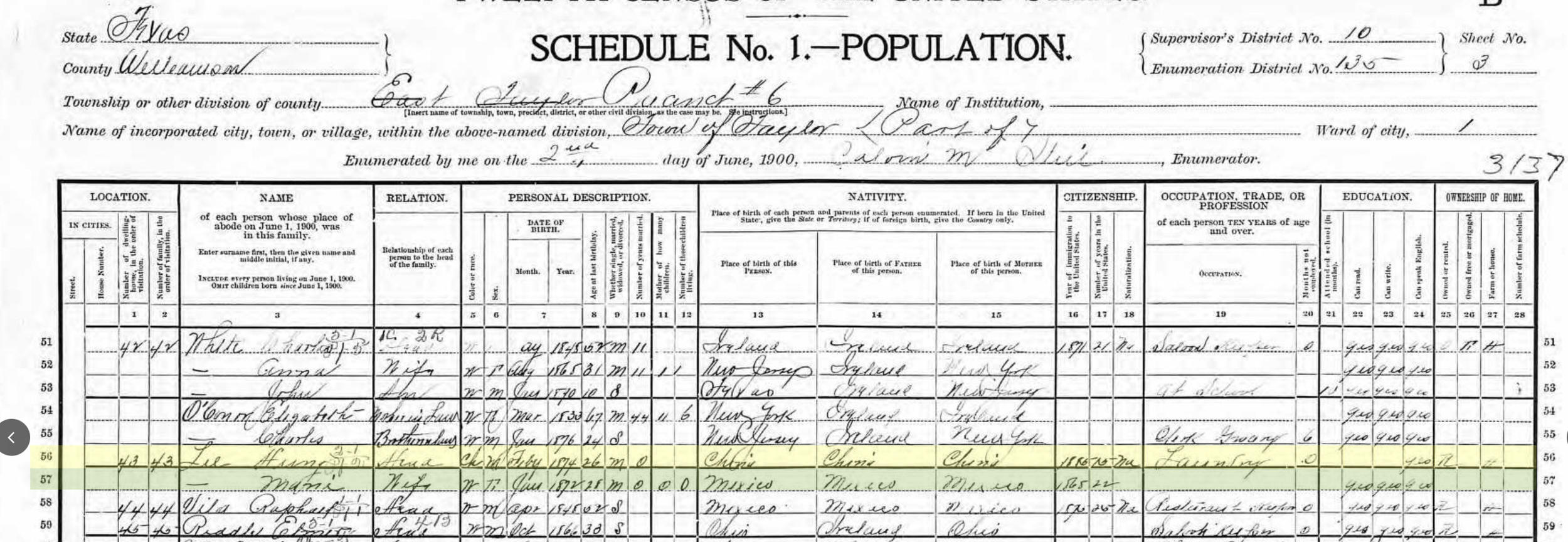
This is taken from the 1900 US Census showing Hung Lee and his wife living in Taylor with Lee’s occupation shown as a laundry worker. Interestingly, Lee is shown as an immigrant from China while his wife was Mexican.
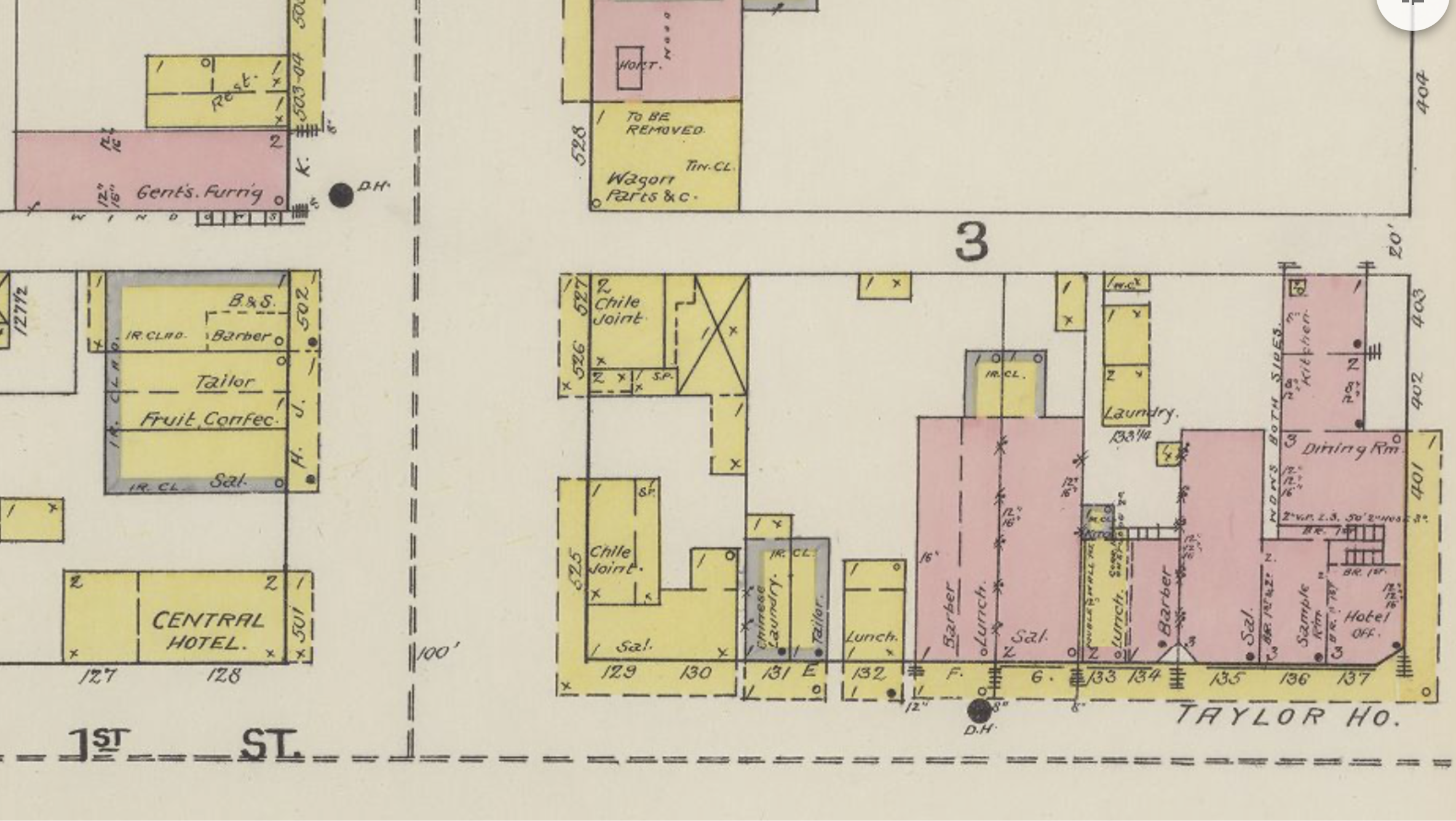
Above is a portion of the 1893 Sanborn Fire Insurance map showing Taylor a Chinese Laundry wedged in between a saloon and a tailor. These businesses were situated right across from the I G & N Railroad depot.
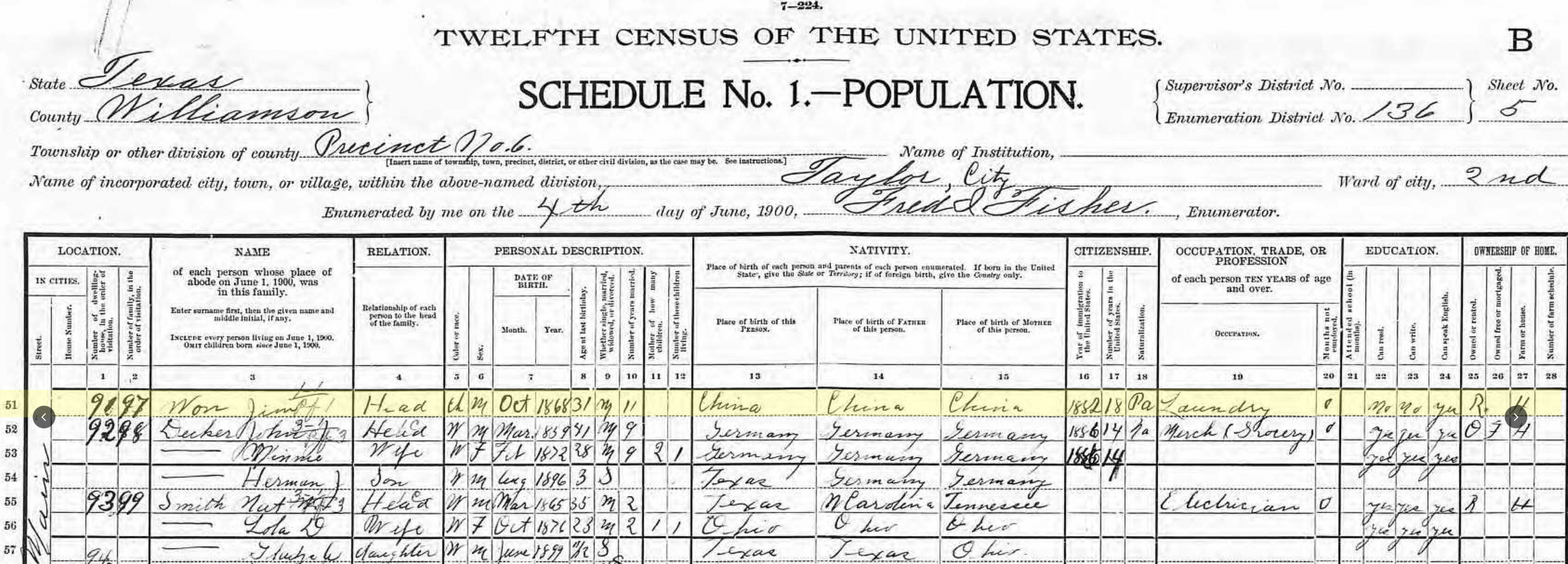
Another clip from the US Census shows Jim Won living on Main Street in 1900. Won, born in 1868, came to the United States in 1882.
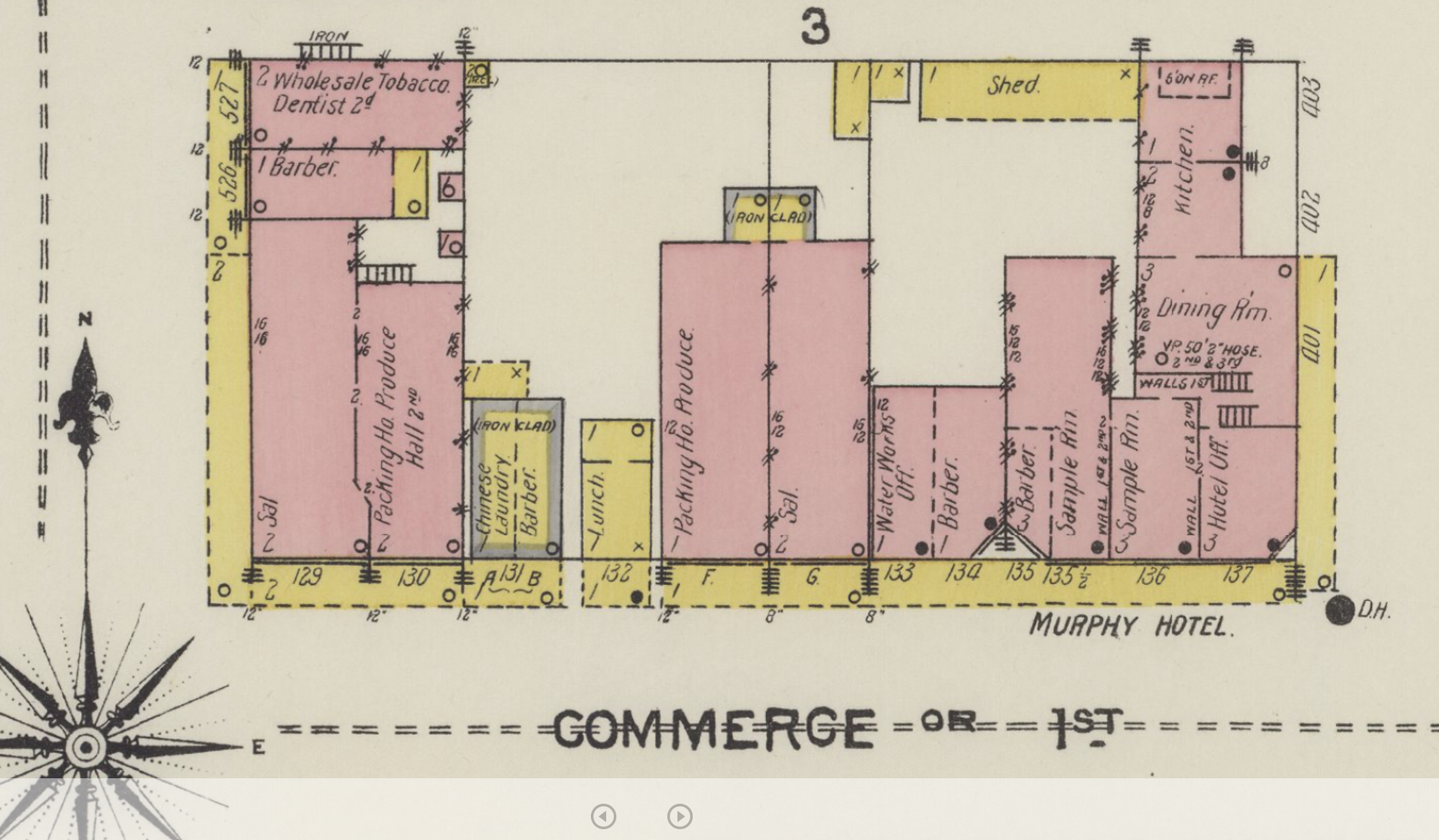
This is taken from the 1904 Sanborn map. Notice that there are more businesses, but the saloon and Chinese laundry are still there. The Murphy Hotel, which would eventually become the Blazilmar, is located at the corner of 1st and Porter.